
The journal
Does a cron expression have 5 or 6 fields?
The short answer and how to tell which format your scheduler expects, with a worked conversion example and a quick checklist.
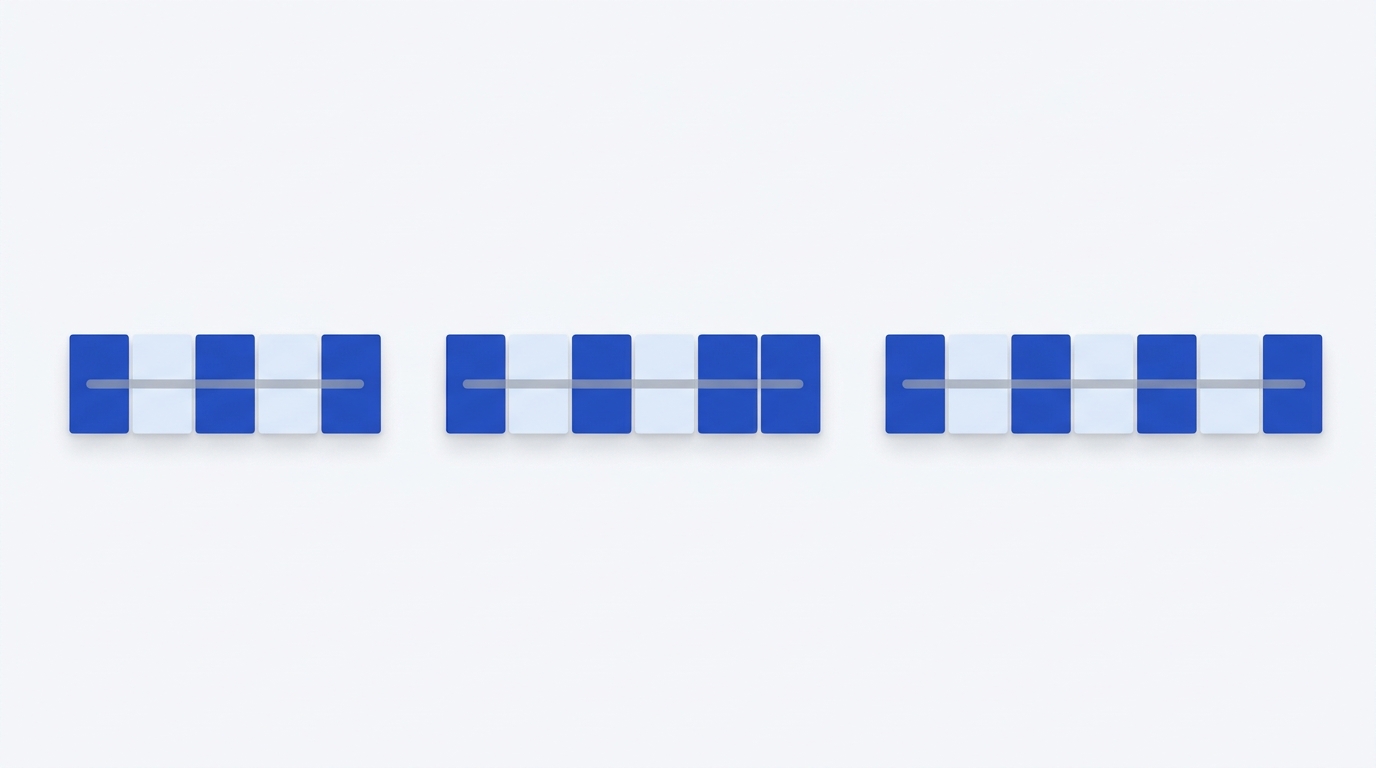
Both exist. Traditional Unix-style crontab uses five fields. Many application schedulers use six fields by adding a leading seconds field, and some add a seventh optional year field. Always match the field count and order documented by your scheduler.
Evidence: a Unix-style five-field format is documented with minute, hour, day-of-month, month, day-of-week only, with no seconds or year fields, in product docs that build on standard cron syntax DataKitchen: Cron Expression Basics. By contrast, Quartz-style cron expressions explicitly require six fields (seconds through day-of-week) and allow an optional seventh year field Quartz CronExpression reference. A modern overview also notes that cron expressions may be five, six, or seven fields depending on implementation DssW: Modern Cron.
What each format looks like
Five-field (classic Unix-style)
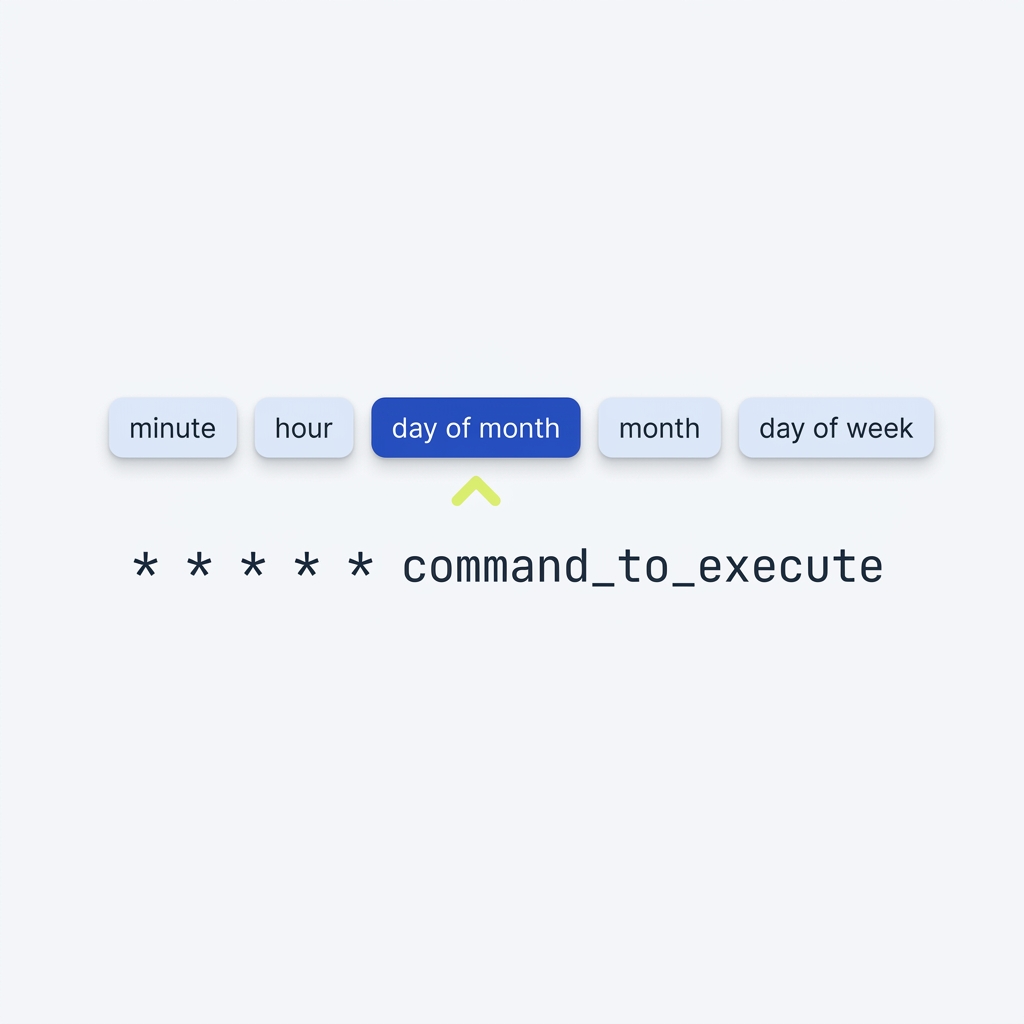
Order: minute, hour, day-of-month, month, day-of-week. Example: 30 2 * * 1 means 02:30 every Monday. See examples and ranges in DataKitchen: Cron Expression Basics.
Six-field (adds seconds)
Order: seconds, minute, hour, day-of-month, month, day-of-week. Example: 0 30 2 * * * means 02:30:00 every day. Quartz documents six required fields beginning with seconds Quartz CronExpression reference.
Seven-field (adds seconds and year)
Order: seconds, minute, hour, day-of-month, month, day-of-week, year. Example: 0 15 10 * * ? 2026 fires 10:15:00 every day in 2026 (illustrated in vendor docs that mirror Quartz-style rules) Elixir Scheduler: Cron Expression.
Tip: The special tokens ?, L, W, and # are part of Quartz-style syntax; they are not valid in classic five-field crontab. See operators in Quartz CronExpression reference.
How to decide which one your scheduler expects
- Read the scheduler’s own reference and copy its example order and operators. DssW’s overview explicitly notes five-, six-, and seven-field variants across implementations DssW: Modern Cron.
- Check for seconds support. If the docs show a leading seconds field, it is not five-field.
- Check for a year field. If present, it will be the seventh field at the end.
- Verify operators. If you see
?in examples, you are likely in a Quartz-style parser; classic five-field cron does not use?Quartz CronExpression reference. - Preview next run times in the actual system if it offers a validator.
If you are new to scheduling reliability, our broader explainer on workflow failure points covers overlap, retries and monitoring: What are the most common failure points in automated workflows?
A worked conversion example (5 to 6 or 7 fields)
Goal: Convert a five-field entry that runs 02:30 every Monday to formats that require seconds (and optionally year).
- Five-field original (Unix-style):
30 2 * * 1→ 02:30 every Monday DataKitchen: Cron Expression Basics - Six-field target (seconds added at the front):
0 30 2 * * 1 - Seven-field target (seconds + year):
0 30 2 * * 1 *if the parser allows any year; to restrict to 2026:0 30 2 * * 1 2026(year field per Quartz CronExpression reference)
Quartz-style day field rule: if you use its operators, one of day-of-month or day-of-week is typically set to ?. For example, "10:15 every day in 2026" is expressed as 0 15 10 * * ? 2026 in Quartz-like docs Elixir Scheduler: Cron Expression.
Common portability traps
- Field order drift: Prepending a 0 for seconds in a system that still expects five fields breaks the schedule by shifting every field.
- Operators mismatch:
?,L,W,#belong to Quartz-style syntax, not classic crontab Quartz CronExpression reference. - Day-of-week numbering: A five-field cron may allow 0-7 (with 0 or 7 as Sunday), while Quartz numbers 1-7 (SUN-SAT) DataKitchen: Cron Expression Basics Quartz CronExpression reference.
Quick checks before you deploy a cron schedule
FAQ
So is it 5 or 6 fields?
Classic Unix-style crontab is five fields. Quartz-style schedulers use six required fields (with seconds) and may include an optional seventh year field. Check your product’s reference: DataKitchen for five-field, and Quartz for six/seven-field.
Can the same expression work everywhere?
No. Field order, allowed operators and day-of-week numbering differ. Compare against the target documentation and test in place. A neutral overview of five-, six-, and seven-field variants is in DssW: Modern Cron.
Related reading: building resilient automations often needs idempotent work and overlap control. See What are the most common failure points in automated workflows? and What is an idempotency key in APIs?